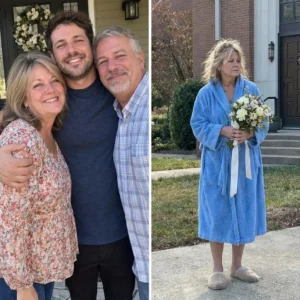
When my 14-year-old son, Mason, asked to live with his dad after the divorce, I agreed even though it quietly broke my heart. At first, he called often — photos of burnt pancakes, movie nights, little updates that reassured me he was okay. But slowly the calls faded, texts turned into one-word replies, and then came silence. His teachers began reaching out: missing homework, distracted behavior… and finally, “He looked lost.” That word kept echoing in me.
I drove to his school without warning, and when Mason got into the car, I saw the truth immediately. He was exhausted, hollow-eyed, barely himself. Bit by bit, he admitted what had been happening: his dad had lost his job and hadn’t told anyone. Bills were piling up, the fridge was nearly empty, and Mason had been trying to protect us both — eating crackers, studying by flashlight, carrying a weight no child should bear. “I didn’t want you to think less of him,” he whispered.
I brought him home that night — no permission needed. He slept 14 hours straight. I made our home soft again: predictable, warm, safe. I left quiet notes on his door — “I see you,” “You’re doing better than you think,” “I’m here.” For weeks they went untouched, until one morning I found a single note on my nightstand: “Thanks for seeing me, even when I didn’t say anything.” That small sentence stitched something back together in both of us. I filed for custody — not out of anger at his father, but because Mason needed stability more than anything.
Today, he lives with me full-time. His room is messy, music loud, robotics trophies on the shelf — signs of life returning. He laughs again, asks for help when he needs it, and trusts that I’ll show up. I’ve forgiven myself for not noticing sooner. I’ve learned that silence isn’t peace, and distance isn’t always independence. Sometimes love means stepping in before you’re asked — showing up uninvited and saying, You didn’t call, but I’m here anyway.