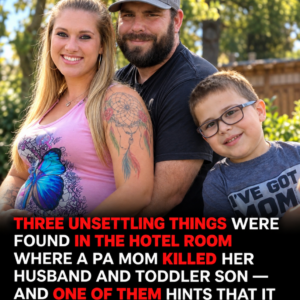
William Edwards drove in silence, his hands clenched around the steering wheel as his five-year-old son, Owen, cried helplessly in the back seat. The child’s voice trembled with fear, begging not to be left with his grandmother, a woman known for harsh discipline and coldness. While Owen pleaded for mercy, Marsha, William’s wife, showed no sympathy. She dismissed her son’s fear as weakness and accused William of being too soft. Watching her indifference, William felt a familiar ache—he had grown up in foster care, surrounded by instability and cruelty, and had sworn that his own child would never experience that kind of fear. Yet, in that moment, he felt powerless, trapped between his promise as a father and the pressure of a wife who believed toughness mattered more than compassion.
As Owen tried to climb into the front seat, desperate to escape, William’s heart shattered. He saw not just his son’s fear, but the reflection of his own childhood—of being unheard, unprotected, and forced to endure what no child should. Marsha’s sharp grip on Owen’s wrist was the final proof that something was deeply wrong. In that instant, William realized that love wasn’t enough if he failed to act. The drive toward his mother-in-law’s house became more than a simple trip—it became the moment he understood that protecting his child would require courage, even if it meant standing against the person he once loved.